
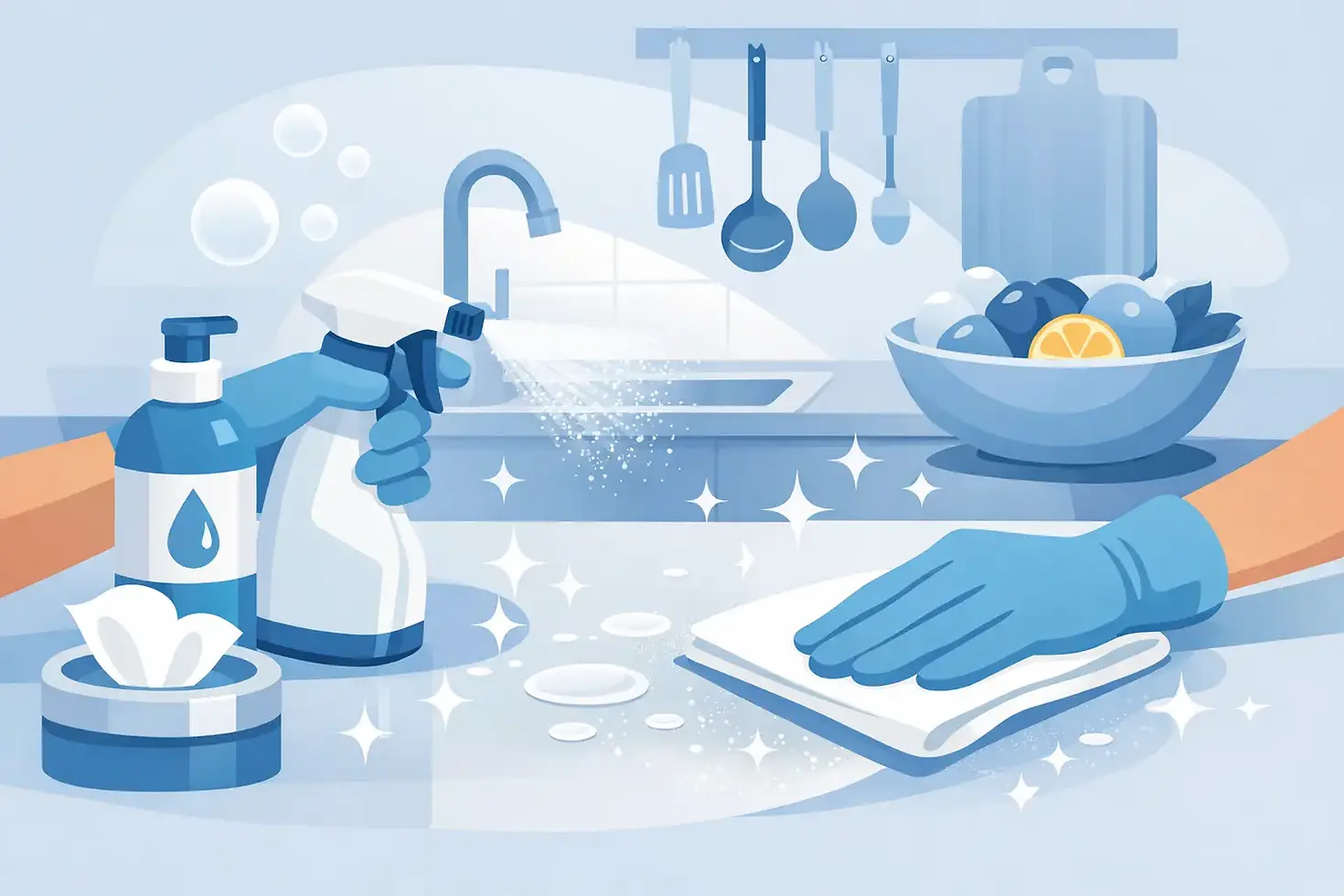
How to Sanitize Kitchen Surfaces at Home
- Alex Pinho
- Aug 21
- 5 min read

A cutting board can look clean and still carry residue from raw chicken. A countertop can sparkle after a quick wipe but have crumbs, grease, or moisture sitting in seams near the backsplash. To sanitize kitchen surfaces effectively, the order of the work matters just as much as the product you use.
For busy households, the goal is not to turn every meal into a cleaning project. It is to build a reliable routine around the areas that touch food, hands, dishes, and spills. A few careful habits help keep the kitchen comfortable to use without damaging the surfaces you invested in.
Cleaning, sanitizing, and disinfecting are different jobs
These terms are often used interchangeably, but they do different things. Cleaning removes visible dirt, food residue, grease, and many germs from a surface. Sanitizing lowers germs to a safer level. Disinfecting is designed to kill or inactivate a broader range of germs and is generally used when someone is sick or when a product label specifically calls for it.
In most kitchens, regular cleaning followed by sanitizing is the practical choice for food-prep areas. Disinfecting every counter several times a day is not automatically better. Stronger products can leave residue, irritate skin or lungs, or dull certain finishes when used too often.
The key detail is this: sanitize only after cleaning. A sanitizer cannot work properly through grease, dried sauce, flour dust, or food particles. Start by removing the mess with warm water and dish soap or an appropriate surface cleaner. Then apply the sanitizing product according to its label directions.
Which kitchen surfaces need the most attention?
Not every surface needs the same level of care. Prioritize places where food is prepared or where hands frequently transfer germs. Countertops around meal prep, cutting boards, the sink rim and faucet handles, refrigerator handles, cabinet pulls, the stove controls, and the kitchen table are all worth regular attention.
Think about the path food takes through the room. Raw meat packaging may touch the counter, then a hand reaches for the refrigerator door, then another person uses the faucet. Cleaning the obvious spill but skipping the nearby touchpoints leaves that path unfinished.
High-touch areas should be cleaned routinely and sanitized when they have been exposed to raw food, spills, illness, or heavy use. A countertop used only for setting down mail does not need the same treatment as one where vegetables are chopped and chicken is trimmed.
Choose a product that matches the surface
The safest sanitizer is not one product for every job. It depends on the material, whether the surface contacts food, and the product instructions.
For food-contact surfaces, use a sanitizer labeled for that purpose. Follow the stated dilution, application method, and contact time. Contact time means the surface must stay visibly wet for the number of minutes listed on the label. Spraying and immediately wiping dry may not give the product time to work.
If the label says to rinse after sanitizing a food-contact surface, rinse it with clean water before preparing food. Let the surface air dry when directions allow. Reusing a dirty dish towel to dry a freshly sanitized counter can undo the work.
Bleach-based products can be effective when properly diluted, but they are not right for every finish. Never mix bleach with ammonia, vinegar, alcohol, or any other cleaner. Mixing products can create dangerous fumes. Open a window or run the kitchen exhaust fan when using products with a strong odor, and keep them out of reach of children and pets.
Alcohol-based products, hydrogen peroxide cleaners, and ready-to-use sanitizing sprays each have their place, but the label remains the authority. A product that is safe on sealed laminate may not be safe on natural stone, unfinished wood, or a specialty countertop coating.
Special care for stone, wood, and other sensitive materials
Granite, marble, quartz, butcher block, and stainless steel all respond differently to cleaners. Natural stone can be etched by acidic products. Wood can absorb moisture and harbor odors if it is repeatedly soaked. Stainless steel can show streaks or develop marks when harsh cleaners are used incorrectly.
For these surfaces, check the manufacturer’s care guidance first. Use a pH-neutral cleaner where recommended, and avoid abrasive scrubbers unless the material instructions permit them. A clean microfiber cloth is usually gentler and more effective than a rough sponge for daily wiping.
Vinegar is useful for some household cleaning tasks, but it is not a registered sanitizer and is not a good choice for natural stone. It also should not be treated as a substitute for a product designed for food-prep sanitation.
A dependable routine after raw-food prep
When raw meat, poultry, seafood, or eggs are involved, work from the food-prep area outward. First, put food away or continue cooking it safely. Then clear the counter and wash the cutting board, utensils, and sink area with hot, soapy water.
Next, clean any drips or splatters from the counter, faucet, cabinet handle, refrigerator handle, and nearby appliance controls. Once those areas are visibly clean, sanitize the food-contact surfaces and the touchpoints that may have been handled during prep. Give the product its full contact time before wiping or rinsing if required.
Avoid washing raw chicken. Rinsing it can spread contaminated droplets onto the sink, counter, and surrounding dishes. Cooking poultry to the proper temperature is the safer approach, followed by a careful cleanup of the prep area.
Do not let tools spread the mess
Sponges and dishcloths are useful, but they can move germs from one place to another when they are left damp or used too long. Use separate cloths for counters and dishes when possible. Replace or launder cloths frequently, especially after wiping up raw-food spills.
Microfiber cloths work well because they pick up fine particles and grease without requiring a heavy amount of product. The benefit disappears if they are reused dirty. Wash them thoroughly before returning them to kitchen duty, and allow them to dry completely.
Cutting boards deserve their own routine. Wash them promptly after use, sanitize when they have contacted raw foods, and dry them upright so air can circulate. Replace boards with deep grooves, cracks, or peeling surfaces that cannot be thoroughly cleaned. A worn board is harder to maintain, no matter how carefully it is wiped.
How often should you sanitize kitchen surfaces?
Frequency depends on how the kitchen is used. A household cooking several meals a day, packing school lunches, or managing pets and young children will need more frequent attention than a kitchen used lightly by one person.
As a practical baseline, clean counters and food-prep surfaces after each use. Sanitize after raw-food preparation, after a spill that could contain bacteria, and after someone in the home has been sick. Clean high-touch handles and faucet controls daily or every few days, depending on traffic. A more thorough kitchen cleaning each week helps address cabinet fronts, appliance exteriors, grout, and places where grease quietly builds up.
During cold and flu season, it can make sense to disinfect selected high-touch spots if someone is ill. Keep that task targeted. The kitchen still needs safe food-prep practices, and more chemical product is not always the answer.
Make the routine easier to keep
Store the products you actually use where they are convenient but safely secured. Keep clean microfiber cloths nearby, and designate a small bin for used cloths so they do not end up back on the counter. Wiping spills as they happen prevents them from becoming a larger job later.
A consistent cleaning routine also makes it easier to notice what needs extra care: sticky cabinet handles, a faucet base with mineral buildup, crumbs in the toaster area, or a refrigerator shelf that needs more than a quick wipe. Those details are often what make a kitchen feel truly cared for.
For homes across the North Shore, a dependable housekeeping routine should fit real life, not create another impossible standard. Clean first, use the right sanitizer correctly, and give the surfaces time to dry. That steady attention helps keep the room where your family gathers ready for the next meal.


Comments